


RESULTS THAT DEMONSTRATE OUR EXCELLENCE
Success Stories
Murcia, spain . 2025
Molina de Segura WWTP
Oblysis® technology was implemented to assess its overall impact on the treatment process at the Molina de Segura wastewater treatment plant.
Project objectives
1. Energy Efficiency
Analysis of the impact on energy consumption in the biological reactor (blowers, mixers and internal recirculation pumps).
2. Sludge Production & Chemical Consumption
Assessment of the impact on excess sludge production and polyelectrolyte consumption.
3. Biological Process Performance
Assessment of the impact on overall biological process performance and key operating parameters.
WWTP DATA
H.E. Design: 292,000
Average daily flow: 18,000 m3/day
Average influent COD: 1,200 mg/l
Influent and Hydraulic Conditions
- Significant discharges from food and beverage industries
- High organic load and low pH
- Highly variable hourly flow patterns
- Occasional toxic industrial discharges affecting biomass activity
Demanding operating conditions due to high hydraulic and load variability.
Operating Configuration (pre-Oblysis)
Advanced ACN+ control software optimizes biological performance and energy consumption
A highly optimized plant, with limited scope for further improvements.
Impact on operating costs
Energy consumption
| Energy Savings (biological reactor) | 22% |
|---|---|
| Average Monthly Savings | 32.707 kWh / month |
Sludge production
| Reduced sludge production | 39% |
|---|---|
| Average monthly reduction (dry matter) | 51.623 kg MS / month |
Polyelectrolyte consumption
| Average monthly savings | 438 kg / month |
|---|
Results after the first 6 months of Oblysis implementation
Impact on the biological process
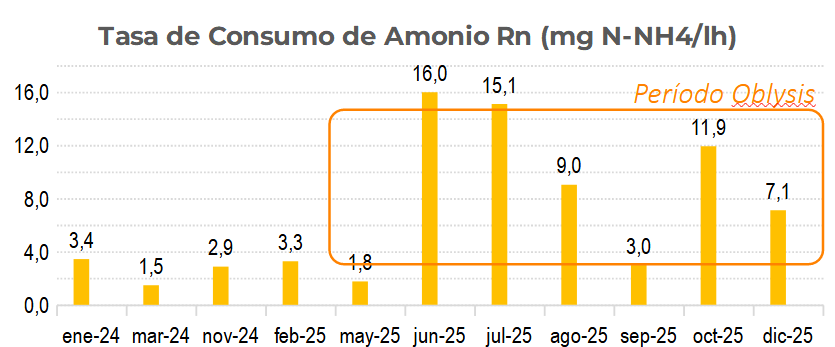
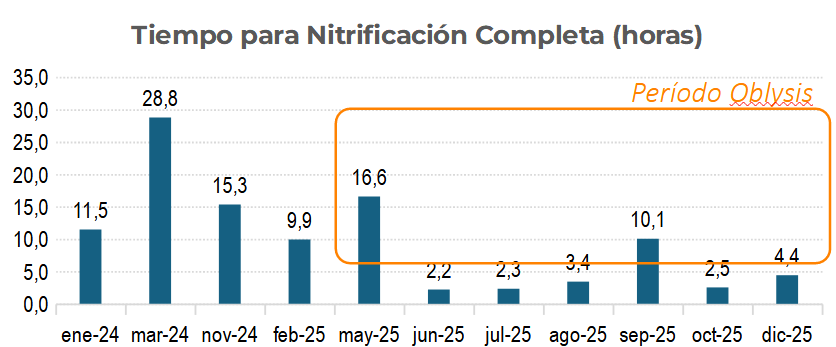
Higher nitrification rate
Respirometric tests show a significant increase in the nitrification rate following the implementation of Oblysis®, resulting in faster ammonia consumption and a shorter time to complete nitrification
High resistance to toxicity
The Molina de Segura wastewater treatment plant is heavily affected by industrial discharges and periodically receives toxic loads. Following the implementation of Oblysis®, the biomass has shown:
- High resilience
- Significantly faster process recovery
- Maintains compliance for ammonia and nitrates, even during toxic shock events
Feasibility assessment
Want to transform your wastewater treatment plant’s biological performance?
We analyse your plant’s operating conditions and assess how Oblysis® can help improve process efficiency, reduce operating costs and increase stability, with no construction work or plant shutdown.
